Pogbog: The Full-Color SVG Font for Tactical Designs
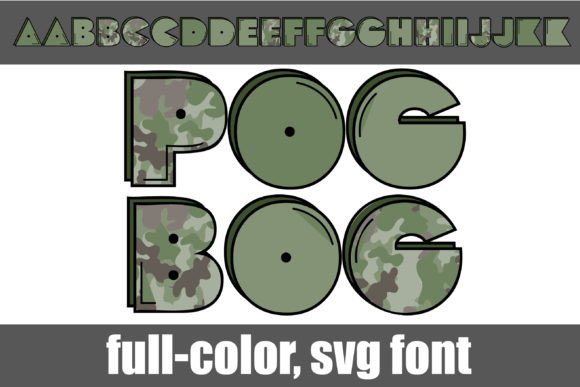
In the world of digital design, finding a typeface that truly commands attention while maintaining vector clarity can be a challenge. Enter Pogbog, a premium font that breaks away from the monochrome standard to deliver a full-color, video game-inspired aesthetic. This isn't just a set of letters; it is a design asset built for impact. Featuring a military color palette overlaid with a distinct camouflaged print, Pogbog utilizes OpenType full-color (SVG) technology to render rich, detailed textures directly within the text. For designers, entrepreneurs, and content creators looking to inject personality into their work, this typeface offers a unique blend of tactical grit and digital nostalgia.
The Anatomy of a Color Font
Understanding how Pogbog works is the first step to unlocking its potential. Unlike traditional fonts that rely on single-color fills, Pogbog is an SVG font. This means the color and texture data are embedded directly into the font file. When you type, you aren't just seeing a vector outline; you are seeing a fully rendered graphic that scales without pixelation. The "military" aspect of the design isn't just about the color green; it involves complex layering of camouflage patterns and shading that give the letters a tactile, almost 3D appearance reminiscent of classic arcade headers or modern gaming interfaces.
Installation is straightforward. Whether you are on a Mac using FontBook or a Windows user managing fonts via the Control Panel, you install the .otf file just as you would any other typeface. However, there is a technical nuance to keep in mind: compatibility. Because SVG fonts are a relatively modern development, they do not render in color everywhere. In programs that do not support full-color fonts, such as older versions of Microsoft Word, Pogbog will appear as a solid black silhouette. This is normal. To see the full camouflage glory, you need software that supports the SVG table in OpenType fonts. Industry standards like Adobe Photoshop, Illustrator, Quark, Inkscape, and Silhouette Studio are fully capable of displaying the font in its intended vibrant state. If you see the colors in your software's preview window but not on the canvas, it is a sign that the program may have limited support.
Strategic Applications: Where Pogbog Shines
Choosing a creative font like Pogbog requires a strategic eye. It is a heavy, display-oriented typeface, meaning it is designed for headlines and logos rather than body copy. Its personality is loud, energetic, and youthful, making it an excellent choice for specific niches.
- Gaming and Esports Branding: The video game style lettering is perfect for stream overlays, tournament logos, and merchandise. It immediately signals "gamer" to the audience.
- Event Marketing: For outdoor events, paintball arenas, or themed parties, the camouflage print adds an authentic layer of texture to posters and invitations.
- Social Media Graphics: On platforms like Instagram or TikTok, where stopping the scroll is paramount, the full-color nature of Pogbog stands out against standard text.
- Product Packaging: For niche products targeting a younger demographic—such as energy drinks, streetwear, or tech accessories—this font adds a bold, modern typography element to the packaging design.
Mastering Font Pairing and Readability
Because Pogbog is so visually dense, it requires careful handling to maintain visual hierarchy. You cannot simply drop it into a paragraph of text; it dominates the composition. The key to successful font pairing is contrast. Since Pogbog is highly decorative and textured, pair it with a clean, neutral sans serif font or a simple serif font for supporting text. A geometric sans serif works particularly well, as the clean lines complement the jagged, tactical edges of Pogbog without competing for attention.
Readability is another critical factor. While the vectorized nature of the SVG font ensures the image remains crisp at any size, the camouflage pattern can make text difficult to read if the letters are too small. Always use Pogbog at larger sizes—think headlines, sub-headers, and call-to-action buttons. If you try to use it for a tagline that is too long, the camouflage pattern may create visual noise that obscures the message. A good rule of thumb is to ensure the letterforms are large enough that the camouflage pattern is distinct rather than muddy.
Practical Workflow and Licensing Tips
Before integrating Pogbog into your brand identity or client projects, there are practical considerations to address. First, always check the commercial licensing. While many premium fonts are available for personal use, commercial projects—such as selling merchandise or using the font in paid client work—usually require a specific license. Ensure your purchase covers your intended use to avoid legal issues down the line.
Next, evaluate the project fit. Does the "tactical" aesthetic align with the brand's voice? For a law firm or a luxury spa, Pogbog would be a poor choice. However, for a tech startup, a sports team, or a lifestyle brand targeting Gen Z, it could be the perfect differentiator.
When testing the font, experiment with tracking (letter spacing). Because of the camouflaged texture, slightly increasing the tracking can improve legibility by preventing the patterns on adjacent letters from blurring together. Also, test the font on different background colors. While it comes with a military palette, it will pop best against high-contrast backgrounds—think stark white, matte black, or even a neon accent color that matches one of the hues within the font's camouflage pattern.
Elevating Your Design Assets
Incorporating a full-color SVG font like Pogbog into your toolkit is about more than just typography; it is about expanding your creative range. Traditional design assets often require layering a font texture over text in Photoshop to achieve this look. Pogbog streamlines that workflow by baking the design directly into the font file. This consistency ensures that whether you are designing a logo, a web header, or a printed flyer, the text maintains the exact same professional quality and color profile.
Ultimately, Pogbog offers a distinct visual voice. It is unapologetically bold and designed for a digital-first world. By understanding its technical requirements and stylistic strengths, you can use it to create designs that are not only visually striking but also strategically effective in capturing the attention of a modern audience.